Oh hi. Remember blogging?
 Thursday, February 4, 2021 at 7:09PM
 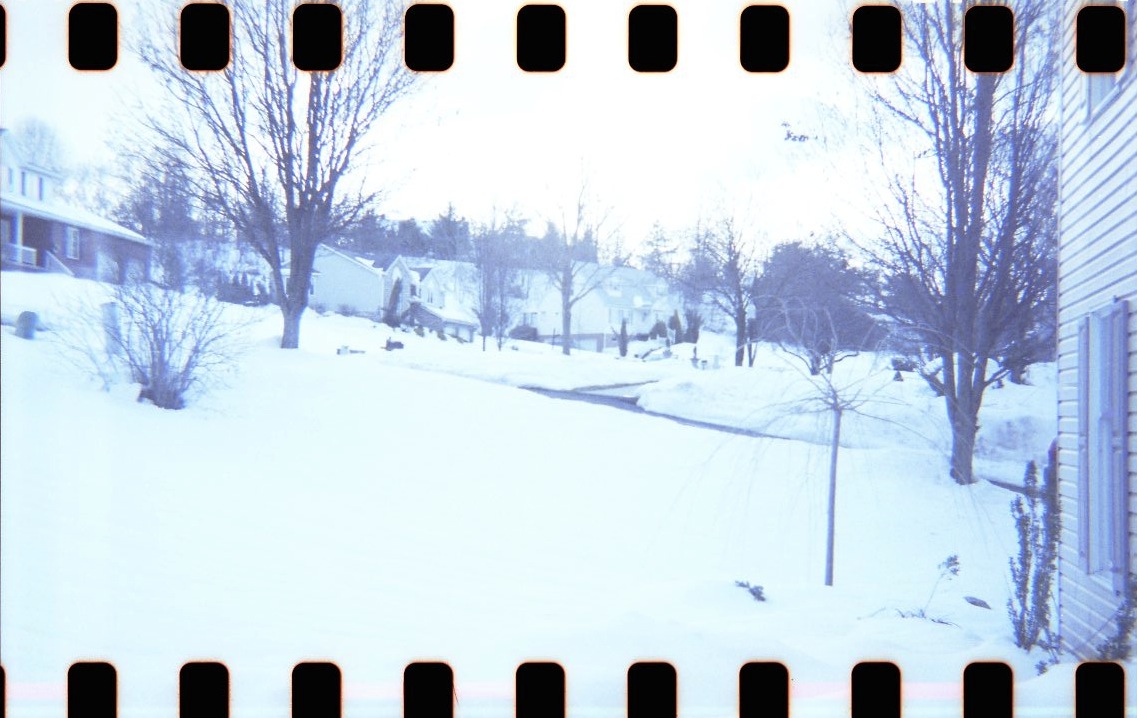 winter yard, 2009
Oh hi. Remember blogging? Maybe some of you never stopped. But I stopped. Obviously. And now I'm wondering if I should start back up again. I feel the pull to move away from social media sites and back to my own space. A reclamation and revival of sorts.
I feel like I've been missing for awhile. Not just from blogging and updating my website and sending newsletters. Missing from my own life. And it's not just because of the weirdness of the past few years: politics, pandemic, etc. It's all of that plus more personal situations: loss, grief, health issues, family issues, deadlines, projects, exhaustion, general malaise and ennui. You know, much of the normal stuff of life that we all deal with in one way or another, all turned up to 11 in recent years.
Looking back through this blog, I realize that my last substantive post was on December 7, 2016, and was titled, appropriately enough, "Moved to Stillness." I wrote:
My attention span is shot. I find it hard to read a book -- or even a whole article or essay some days. Writing is no better. I write a few paragraphs and I'm bored, restless, distracted (or willing to be distracted). I need to reclaim my mind. My focus. My sustained attention.
I've been daydreaming about churches, chapels, cathedrals. I have a complicated history with organized religion, but lately I feel the pull to hushed, holy spaces, the kind with wooden pews, stone floors, vaulted ceilings, and preferably candlelight. I don't want to attend a service. I want the silence.
The author Pico Iyer wrote, "A chapel is where you can hear something beating beneath your heart."
What beats beneath one's heart? Blood? Breath? Gravity?
Whatever beats beneath my heart -- this is what I crave. I'm seeking silence, solace. The solitude that is not loneliness. Some sort of solution for the way the world seems to be caving in on itself everywhere I look. I'm seeking a personal solstice. Solstice, from the Latin solstitium, meaning "standing."
To stand. To be still. There is a stillness that beats below your heart. And beneath it all, some story, some song.
I crave a chapel because I'm heartworn and weary. Because I see no separation between the mundane and the holy. Because the world is so beautiful and so terrible. Aren't we all just seeking divine comfort? If I could sink deep enough into the solstice chapel of my own heart, perhaps I could sustain my attention, find sustenance there, be moved to stillness.
I didn't know then that I'd be moved to such stillness that I'd be silent here for more than four years. That the injustice and weariness of the world would deepen and crack and carve channels in so many of our hearts. That underneath all this silence and stillness would be raging wildfires, deafening floodwaters, howling rioters.
God help us, it's been a few years, hasn't it? (And truth be told, for so many of our fellow humans, it's been this way for decades and centuries.)
It's been more than four years since I wrote anything meaningful here, more than five since I felt like I tumbled outside of time and lost my way. These past 5+ years have held the worst moments of my life. I've spent a lot of time writing about them privately, and I don't need to catalogue them here. But these same years have also held some of the best experiences of my life. In 2017 I spent a month traveling around Iceland and England, fulfilling a long-held dream. In 2019 I (co)wrote a book published by a major national publisher, an unexpected fulfillment of another long-held dream. In 2018 we added two new furry friends to our family who make us smile every day. And through it all, this little old lady has been my constant companion. (They all bring us so much joy, as does the memory of my best feline family member.)
I googled myself the other day and stumbled upon a post on someone else's blog in which they quoted one of my blog posts from about eight years ago. I read my own words and felt two things simultaneously: 1) I have no memory of writing this; and 2) I like this.
I'd written this blog post, titled "Life Isn't a Calendar," in the last few days of of 2012. I concluded with this:
The calendar days are tidy squares lined up in orderly rows, everything numbered to provide a false sense of linearity. It tricks us into thinking life is this way. Choose a word, set an intention, make a goal. Move forward, declare accomplishment. Make another list and tick it off step-by-step. But life is not a calendar or a list or a ladder you can climb rung-by-rung. Life is the ebb and flow of ocean tides, the sunlight and dappled shadow of forest paths, the contrast of white snow on evergreen boughs. Life is the overcast sky of winter that blurs the line between day and night, and the long June days when golden light seeps well into the night. Life is now. It's the driveway that needs shoveling, the dishes that need washing. It's the candles you light, the books you read, the tea you drink, the people you kiss. It's the lists you make and the ones you forget. One step forward, two steps back, and three to the side for good measure.
In three days I'll turn the page to another year, but I'll know that this is just one way of keeping time. There are other ways to make sense of things, to pay attention to what matters.
She (I) was right: there are many ways to make sense of things, to pay attention to what matters. For me, writing is one of those things. And maybe I'll do some of it here.