Courses & Workshops

Teaching (elsewhere)


I'm presenting a brand new workshop! Join us for ecamp February 19–26. (By clicking on the image above or registering through this link you help to support my work. Thanks!)

I'm teaching a writing workshop at the Midwest Be Present retreat in Culver, Indiana, in May 2012. (Reg. is open!)

I'm published in...

In the Bookshop

Featured On

Five Star Friday

Affiliates*

Kindred

Entries in stories (34)

Wednesday
Dec152010

Small Expectations


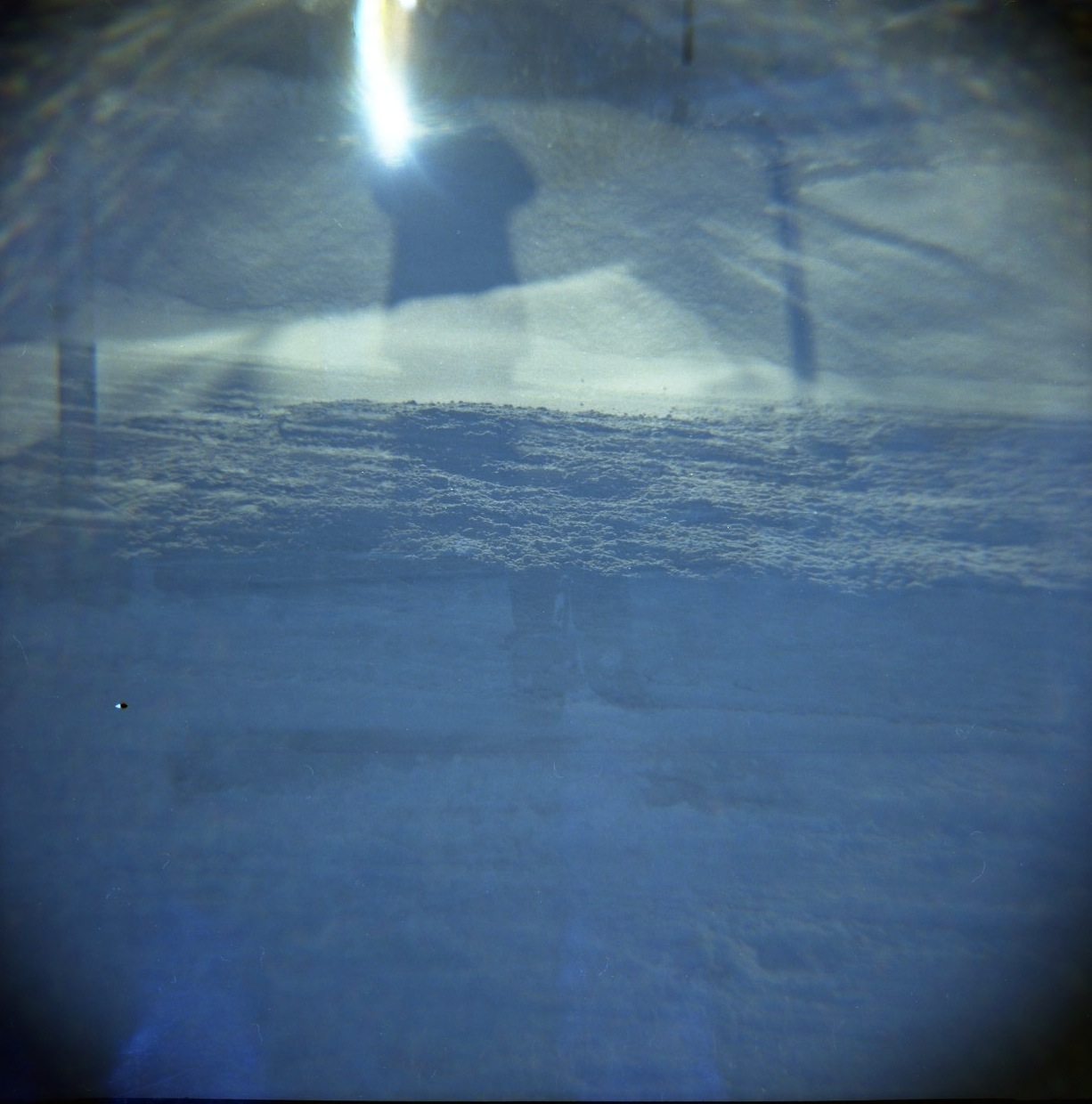
winter multiple exposure (Diana F+)

From the warm corner of the couch I see the girl tromp her way to my front door. She's suited up for the snow in black snow pants, boots, a pink-and-black checkered jacket. Her shoulder-length brown hair frames her face under her dark, knitted ski cap. She knocks. I answer. The girl looks to be about 11 or 12, but I'm not always the best judge of age in kids. 

"Would you like me to shovel your driveway?" she asks.

I look at her and her shovel (is it kid-sized?), and then at my driveway, long and wide. She is earnest and confident. I imagine her snowboarding down a mountain. She looks like a girl who would snowboard. She looks like the kind of girl I'd like to have been. The kind of girl I'd like to be.

"Sure," I say. "How much?

"Hmm... five or ten bucks?" She shrugs one shoulder, like it's no big thing.

"Okay."

"Okay, I'll knock on your door when I'm done."

From the window, I watch her push the shovel into the five inches of snow covering my driveway. I watch her slip backward just a bit, the bulk of the snow against the shovel making her lose her footing. She's too small to do this whole thing, I think.

I open the door again and tell her just to do the left side so I can get the little Honda up it. I tell myself we can leave the right side snowy, since our SUV is sturdy enough to navigate it.

"Just the left side? Okay," she says.

She keeps shoveling. She picks up steam. The girl's a champ. I look up again and see her taking a thirty-second breather, propping up her wrists on the shovel's handle, staring up at the sky, her back to my house. What is she thinking about? Will she use this money for a ski trip? To buy Christmas presents? Does she know I'm watching her from this side of the glass? From this side of childhood?

She clears off the left side in no time and I realize that I underestimated her. I think about telling her to go ahead and do the whole thing, but I feel too guilty.

As promised, she knocks again, and I hand her a plastic zip-top baggie filled with a five dollar bill, a one, and four dollars in quarters. I'm out of bills, but I have plenty of quarters. I could have paid her fifteen if she'd done the whole driveway.

Instead, I just say, "Thanks!"

She leaves, and I wonder: Would I have told her to clear just the one side if she'd been a boy?

An hour later, when I'm sure she's not in the neighborhood to see me, I go out and shovel the right side myself. If she can do it, so can I.

Wednesday
Apr222009

Gradbabies


You can also listen to this story here.

I saw my aunt and uncle in the grocery store the day before Easter. We met up at the end of the jam and jelly aisle, in an open area near the meat counter. I waved first, since it seemed inevitable that they'd see me. It had been at least a year since I last saw them, and I wanted to give them plenty of time to recognize me out of context.

The only thing in their cart so far was a 10 pound bag of potatoes. Later on I'd see them picking out a ham. Until a few years ago, we all used to gather for Easter and Christmas at another aunt's house. But it looked like everyone would be cooking for their own this year.

"Anything new?" my aunt asked.

I gave the standard, "Not much," and then remembered something new, a growing rarity these days: "I'm going back to school."

"Oh?" my aunt said. "That's interesting."

"When am I gonna be an uncle?" my uncle chimed in.

I knew what he meant. "You're already an uncle," I said, trying to sound good natured. "And you're a grandfather! What more do you want? To be a great-uncle?"

"He's that, too," said my aunt, referring to my other cousins who started babymaking a few years ago.

"That’s right!" I said, keeping up the lighthearted banter just a bit too loudly. "See, you don’t need me at all."

We talked for awhile longer, but the subject of me going back to school never came up again. Nobody wanted to know where or why or how or for what. After that conversation, I wondered how many other people are thinking what my uncle, always the outspoken one, actually said.

Me: I’m going to grad school!

Others: When are you going to have a baby?

At a family visit a few years ago, I stood beside my grandmother while we watched a scene unfold around the clan's newest infant. I'm not overly close with my grandmother, and she's not an overly talkative woman, but I know she loves me. After minutes of silence, she turned to me and said, "Well, your mother wanted to be a grandmother, but I guess that's not going to happen now."

I found this curious for several reasons, the main one being that she is my paternal grandmother: my father's mother. Unless she and her daughter-in-law had developed a strong bond recently, or my mother was much more grief-stricken about my childless state than she's let on, I couldn't imagine this was an actual conversation the two of them would ever have.

I didn't know what to say, so again I played the jester. I gestured to my younger brother and said, "Hey, he could have kids!"

I don't know why my grandmother assumed kids were out of the picture for me. I can't recall ever discussing with her my angst and ambivalence about becoming a mother. And this was just a few years ago, when I was in my late 20s or very early 30s and still spry enough to try for a little spring chicken if I so chose.

All in all, I'm thankful that I don't get much pressure from family or friends about my childlessness. For now, this is what makes sense and works for me and my husband. People generally respect that. But every so often, someone slips, and I wonder how many people are questioning my choices. That happens to everyone, I suppose. At some point, we just need to stop worrying about what family, friends, or society think of the path we choose.

A friend recently told me, "I'm so tired of trying to manage my image with my family." For sure, that can be exhausting work, full of subterfuge and half-truths. Personally, I've never really felt the need to do that, especially outside of my immediate family. Most of them have never really known me, but only because we run in different circles, not because I'm hiding anything.

While I was growing up, my parents, brother, and I often spent Friday nights at my great aunt's house in the country. This was on my mother's side of the family. There was always an elaborate spread of food for an evening meal, well after dinner time. It felt so decadent to eat after dark. Summers were the best because the table was covered in delights from my aunt and uncle's garden: sliced bright-red tomatoes, deep green bell peppers, shapely spring onions.

When I became a teenager, those visits became less fun, as do most things at that age. This was during my mandatory dark and twisty phase, in which I was trying to embrace the writer within. I remember sitting on a wooden stool at the little bar island in the kitchen, apart from the family merriment in the living room, and writing something along the lines of: These people are my relatives, but I do not feel related or relevant. It was my way of realizing that you can't choose your relatives, but you can’t hide from them, either.

Most of the people from those Friday night gatherings are far away or gone now. Unlike my dad's side of the family, which is teeming with new life, my mom's side has only seen two new additions. If anyone should be worried about my procreation habits, it would be them – if there were anyone left to worry.

As I settle into my third decade, I have a growing hunger for family and relative connections. But I'm also not ready to throw my own eggs into the ring just yet. When I am, I guess we'll all have something to talk about.

Wednesday
Feb112009

Don't Fear Your Creative Genius

Dear Creative Ones,
Please watch this video. It might be just what you need.

"Elizabeth Gilbert muses on the impossible things we expect from artists and geniuses -- and shares the radical idea that, instead of the rare person "being" a genius, all of us "have" a genius. It's a funny, personal and surprisingly moving talk." (from TED Talks)

Sunday
Jan182009

Pitfalls of the Blogging Writer


There are many things I love about being a writer. There are many things I love about blogging. But sometimes, being a writer who blogs can be a real drag. Actually, being a writer has a number of pitfalls. I live in constant fear that I'll mispronounce the word "nuclear." I worry about undetected grammatical errors infiltrating my daily speech. Writing a quick email is never quick or easy. Words are my trade. Unfortunately, those very same words are what we English speakers use to communicate. So every written or verbal interaction is like a landmine for writers. One false move or double negative and BOOM! Not good.

I love using this space to tell stories. I also love that it's a place to make you laugh, share truth, and generally form and kindle connections. That's what I love about writing in general. So when I'm quiet for a few days (or nearly two weeks), it's not because I'm not thinking of you, dear reader. It's because I feel constrained by my role as Writer, capital W. I want to stop by and say, Hey friends, how's it goin'? It's cold and snowy here. Oh, and I've been working on a cool project. What's new with you?

But that's not very story-ish, now is it? (Plus, dropping the letter "g" from the ends of words could get me in trouble with the word police.) Even writing this post feels like a cop-out. In the back of my mind, I'm always aware that what I write on this blog can be used to judge me. Of course, that's true for all of us who blog or share our words in a public way: There's always the risk of judgement when we put ourselves out there. But that's a whole different emotional animal that deserves its own series of posts.

I mean that I know that potential clients and editors can come here and judge the quality of my writing or the content of my posts. I have no statistical data on this, but I believe that what I write here may be a factor in whether or not someone hires me. So I feel an unspoken pressure to make sure it's always good.

But that kind of pressure in this kind of format leads to no writing. While I often use this medium to share stories, a blog is something different than a book of essays. Sometimes I wonder if I should make it more like an online publication and less like my little corner of the virtual town square. But I've developed real friendships and made good professional contacts as a result of blogging. Erasing the community quotient from this space doesn't feel right.

I'd like to know how those of you who make your living creatively feel about this topic. Do you feel like everything you write must be a reinforcement of your personal "brand"? (I know, I know: many of you hate that term.) Does this issue of quality control impact other artists as much as it does writers? What about those of you in other fields? How do you balance staying in touch and building community with the need to provide quality content on a regular basis? And while you're at it in the comments, How you doin'?

Friday
Nov282008

Self Reflection


The man behind me in line at the post office smells bad, like a combination of body odor, motor oil, and stale cigarettes. I try to stand as far away from him as possible without creeping out the guy in front of me. But suddenly the man behind me starts to talk, apparently to me. He makes some comments on having to wait in line and trying to have fun regardless. I smile vaguely and mumble an agreement. But of course he isn't done.

He launches into a seemingly random and convoluted story about how he had to lecture someone -- his son, I think -- on acting like a man. Being a man isn't something that happens right away, not even after you've been in the military, he tells me. But his daughter, she had a four-point-grade-average. And why? Because she worked hard. You gotta study and work hard. And learn to be a man. I'm not gonna do it for you.

The line moves forward, and I'm next. Someone else is talking loudly about a local ski resort, and suddenly the man behind me switches subjects and launches into a treatise on the place. They have free skiing this time of year, he says, to get you hooked so you'll come back and pay later. He says he worked there for five years. I ask him if he skis. He says no, and seems to see the humor in this. I can't help thinking he's making the whole thing up. But when I look online later, I find out that the resort is indeed running a free ski ticket special.

The conversation is confusing and makes me feel embarrassed, but now I'm too invested in it to just turn around and ignore the man. I tell myself that he's probably lonely, possibly homeless, and perhaps delusional. Maybe he doesn't even have a son or daughter. Or maybe he does, and they don't want anything to do with him.

I don't want to talk to him, but I tell myself that he's a person who deserves respect. And what harm can a bit of conversation do? But even as I'm trying to be magnanimous, I notice myself glancing at the faces of the people in line behind him, wondering if they think I'm there with him, or if they pity me for being the sucker who got roped into talking to him. Or even worse, maybe they're thinking how kind I am for taking pity on him. I catch myself caring what these strangers think of me, and I feel ashamed.

The mail clerk calls "Next!" and I walk away from the one-sided conversation, pausing just long enough to let the man finish his sentence. I get swept up in the details of my mail and lose all track of the man. I have no idea what kind of transaction he does or whether he leaves the post office before me.

I leave, thinking about how I tried my best to see this outcast as a real person. But I also know that I did it halfheartedly, with reservation, and a secret sense of accomplishment at being the sort of person who will pay attention to a dirty, rambling man. And then I feel shame at such watery pride. My attempt to be openhearted is a thin gruel that amounts to nothing more than self-righteousness. It's sour and unfulfilling.

I feel even worse a few minutes later during a phone call with a friend when I complain about the wait in the post office and the chatty, smelly man behind me. I treated him like half a man to his face and then scorned him in private.

What kind of a person does that make me?

It makes me the kind of person I dislike. I once lambasted a friend of my parents' who complained about the homeless people panhandling outside of his office. If they really wanted a job, he claimed, they could get one. I was baffled and hurt when my dad agreed with his friend. I reminded him of how many jobs he'd personally lost due to lay-offs and plant closings. There but for the grace of God, I said. I lectured my elders on how good people end up down-and-out due to circumstances that that they couldn't foresee and that we don't know.

These were the same lectures I gave myself ten years ago as a volunteer coordinator for a mobile soup kitchen. The program fed dozens of people each night on the streets of east London. I was fresh out of college, alone in a new country, and floundering in a role that lacked adequate management and supervision. I spent most of my time hiding out in the office, ordering supplies, creating newsletters, and making the monthly volunteer schedules. I went out on the van just a few times during my year with the program. I was afraid to interact with the homeless men and women, afraid to be on the streets at night, afraid that I would look afraid. I let that fear guide me, even though the interactions themselves were never very frightening. But I made myself the wizard behind the curtain, keeping both the volunteers and the clients at arm's length.

I'm uncomfortable around the homeless, the elderly, the disabled, the infirm, the incoherent. This makes me uncomfortable with myself. To make up for it, I acknowledge misfits in the post office. I always try to look homeless people in the eye. When they ask for money, I either give a little something or say, "Sorry, not today." I try to give them a small piece of the respect I've lost for myself, and in that way, try to regain it.